There Is a Budget for Every Season
By Joan A. Roberts | Divine Accolades
If I became poor today, would I still love food? Would I still be a foodie?
Absolutely. That part of me is quite settled.
My restaurant visits might become less frequent, but my kitchen would still have something to say. A little onion meeting warm oil. Rice steaming beneath a lid. Chicken seasoned patiently, because a modest grocery bill does not require a disappointing dinner.
After God, good food is one of the joys I hold closest. I would make room for it.
You might walk past me without noticing expensive shoes, an elaborate hairstyle, or a wardrobe worth discussing. But spend a little time around me, and you would probably smell something delicious.
That is where some of my happiness lives.
If money became scarce, I would sit down with my expenses and be honest. Cable could go. Subscriptions could disappear. My phone plan could become simpler. I would protect water, electricity, a safe home, my health, and food. Some comforts would have to wait their turn.
There is a budget for every season. The task is to understand the season you are in and choose accordingly.
Different stores. Different prices. Different clothes, hairstyles, homes, and ways of getting where we need to go. Take your pick—with your circumstances in mind.
I could wear a less expensive dress and still carry myself beautifully. Wash it, press it, find the right fit, and add a little sass. My mirror would not need a receipt before recognizing me.
My body remains a temple of the Most High in every season. I would care for it with nourishing food, rest, cleanliness, and movement suited to my health. I would find a routine I could afford to keep.
I would also search my home before assuming I had nothing.
There might be a dress hanging quietly in the wardrobe, still lovely, never worn. Shoes taken out once. Something bought for a version of my life that never quite arrived. Useful things that no longer suit my taste or needs.
I might hold a yard sale or two. Let somebody else enjoy what I have left sitting. Those forgotten purchases could become groceries, a paid bill, or the beginning of something small.
If I still needed help, I could humbly ask a few friends for five or ten dollars—whatever they could freely spare. I imagine making one thoughtful appeal, receiving it with gratitude, and considering what I could build from the proceeds and their kindness. A modest business, perhaps. Something useful, manageable, and capable of growing.
I would want to give that beginning my full attention.
And when I walked down a store aisle and something beautiful caught my eye, I would practice leaving it there.
I could admire the fabric. Imagine the shoes with a dress. Enjoy the possibility for a moment, then keep walking. Some things can remain a dream, a taste, a desire until their time comes. I do not have to turn every passing attraction into a purchase.
As long as I have something to wear and it serves me well, I am fine.
The lovely thing can stay on the shelf. My peace can come home with me.
I imagine I would become quieter, too. More observant. I would notice who called, who listened, who offered a meal without making me feel small. I would remember the people whose warmth remained steady when my circumstances changed.
Those are details a writer notices: the pause before an answer, the chair pulled closer, the kindness tucked into an ordinary question.
A writer must be able to imagine a life beyond her own. You do not always have to own the shoes to consider how they might feel on someone else’s feet. You must be willing to picture the walk—the distance, the weight, the place that person is trying to reach.
Even this imagined season asks something of me. What would I keep? What could I release? What would I discover about myself once the familiar comforts became quieter?
I would still go to church.
Perhaps I would carry the sermon home more deliberately. Read the Scripture again. Sit with a sentence that followed me through the afternoon. I would bring my worries into prayer and ask for the wisdom to recognize the next practical step.
I would be intentional with my words, knowing they can become seeds. A conversation might open a door. A piece of writing might find a reader. An honest request might bring help. I would keep planting and remain attentive to what grew.
And I would keep cooking.
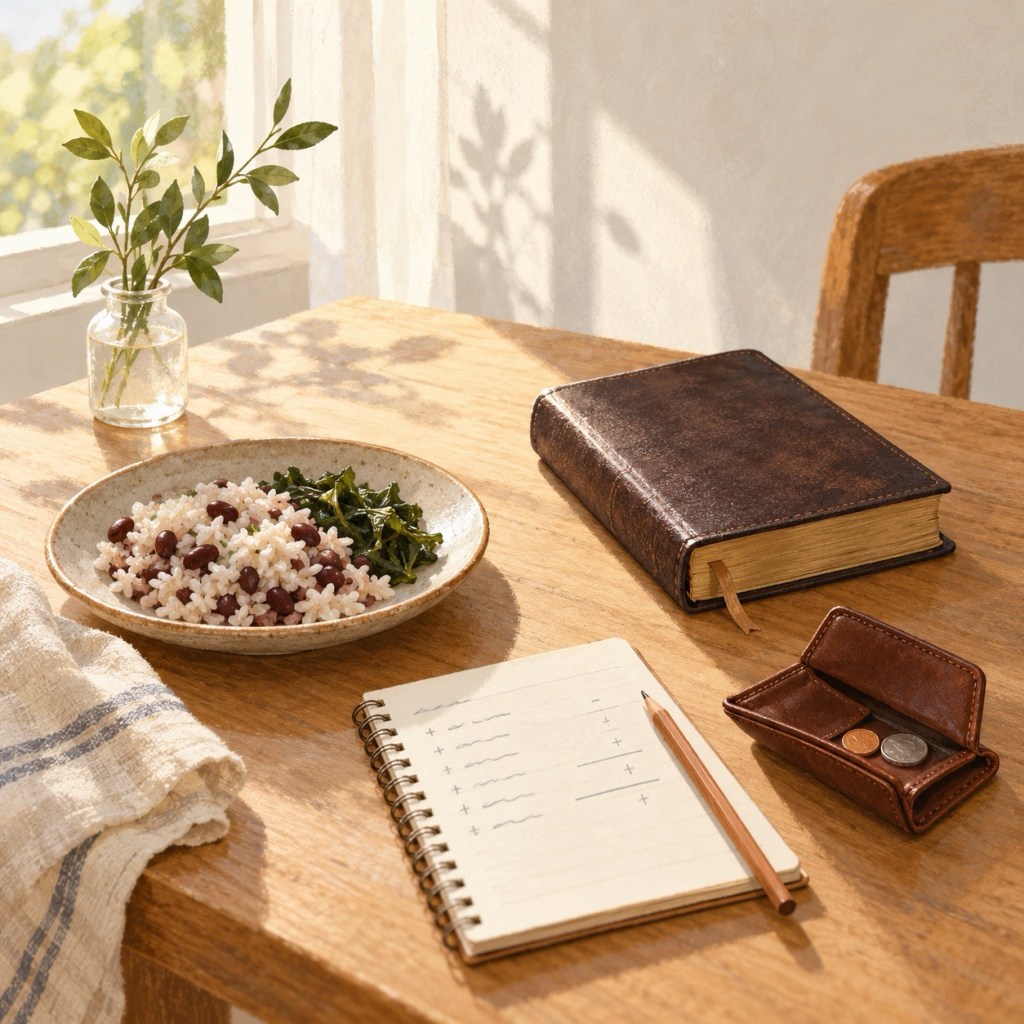
Beans and rice could still deserve a proper plate. A simple meal could still be seasoned with care. I might cook once and eat twice, stretch ingredients, learn another recipe, and discover that something delicious had been waiting inside a very ordinary shopping bag.
I would thank God for it.
Loving food has always been personal to me. It is nourishment, curiosity, creativity, and pleasure. It is the wish to feed myself well and, whenever possible, offer somebody else a taste.
My budget might change the ingredients. I would work with what I had.
There is a shoe for me in this season. There is a meal I can make, a choice I can afford, and a small pleasure I can receive with gratitude.
I intend to find them.
And if you come by around dinner, there may still be enough for two.