Your room is not just a place in your home. It is your sanctuary.
A place where the noise of the day fades. A place where your body exhales. A place where your mind is allowed to be still.
For me, sleep is not something I fall into. It is something I prepare for.
Clean sheets matter. Fresh, soft, and comforting. I wash mine often—not out of routine alone, but because rest deserves intention.
There is something about laying down in a space that feels cared for.
Then comes the quiet ritual.
A gentle lavender mist on my pillows. A soft fragrance in the air. A candle glowing in the corner—not too close, just enough to warm the room with light and scent.
Sometimes it is the candle. Sometimes it is the fragrance. But something about that atmosphere tells my body: you are safe now.
The lights are never harsh. A small bedside lamp keeps the room calm, never shocking my eyes awake or asleep.
Even my body is prepared. A soft massage for my legs, my back—simple care, even if I do it myself. Because rest is not just lying down. It is releasing the weight of the day.
Your sanctuary should serve you.
Not just as a place to sleep, but as a place to pray, to reflect, to read, to be restored.
Sometimes, I read my Bible as the final act of the day. And somewhere between the words and the quiet, sleep gently comes.
Because true rest is not laziness. It is restoration.
Sleep is not an interruption of life. It is part of how we are sustained.
So take care of your space.
Let your room reflect peace. Let it carry softness. Let it hold your quiet moments.
Because how you rest says a lot about how you care for yourself.
And sometimes, the most powerful form of self-love is allowing yourself to rest… well.
Goodnight. 🌙
Footnote: “He gives His beloved sleep.” — Psalm 127:2
I say this all the time. I am grateful for the little things and not just the most.
I am profoundly grateful that you let my words sit in your hearts and you give audience to what I have to say in writing, giving my camera shy persona, 😂 regardless I found a space to make up my deficiencies and project my voice.
This sure means a lot to me.
I am not writing because I am bored
I write because I am always in a place of asking questions and wandering and searching through my mind and thoughts and scriptures of course.
I technically love meeting people and within their stories I see a lot and I make these pieces into a beautiful anecdote with lessons from a place of love and gratitude to God.
Life is beautiful
Thank God everyone, everyday.
It’s not just about the big stuff if you look deeply, the seemingly small stuff created the big stuffs.
Thank you for comments and views
If you are full of gratitude today, kindly show some love and show me some likes and please subscribe.
I know many of you have read some of my poems, especially I Have an Identity, and I remember some of the conversations and comments that followed.
Let me clarify something.
I am not writing against marriage.
I am not writing against men.
And I am not writing from a place of rejecting the beauty of family.
I believe in marriage. I love family. I love to love. I believe there is something beautiful about a man and a woman coming together to build a family when that relationship is embraced with maturity and responsibility spiritually, mentally, psychologically, emotionally, and socially.
Marriage can be wholesome.
Marriage can be healing.
Marriage can be a place where two people grow, serve, encourage, pray, build, and become better versions of themselves.
But marriage should not erase the people who enter it.
I should meet you better than I left you. And you should meet me better than you found me.
That is how I see marriage.
Your life should be better because you met that man.
His life should be better because he met that woman.
The children should be better because those two people came together.
The home should be better because love entered it.
Marriage should not diminish the individual. It should give two people an opportunity to strengthen one another.
Scripture says:
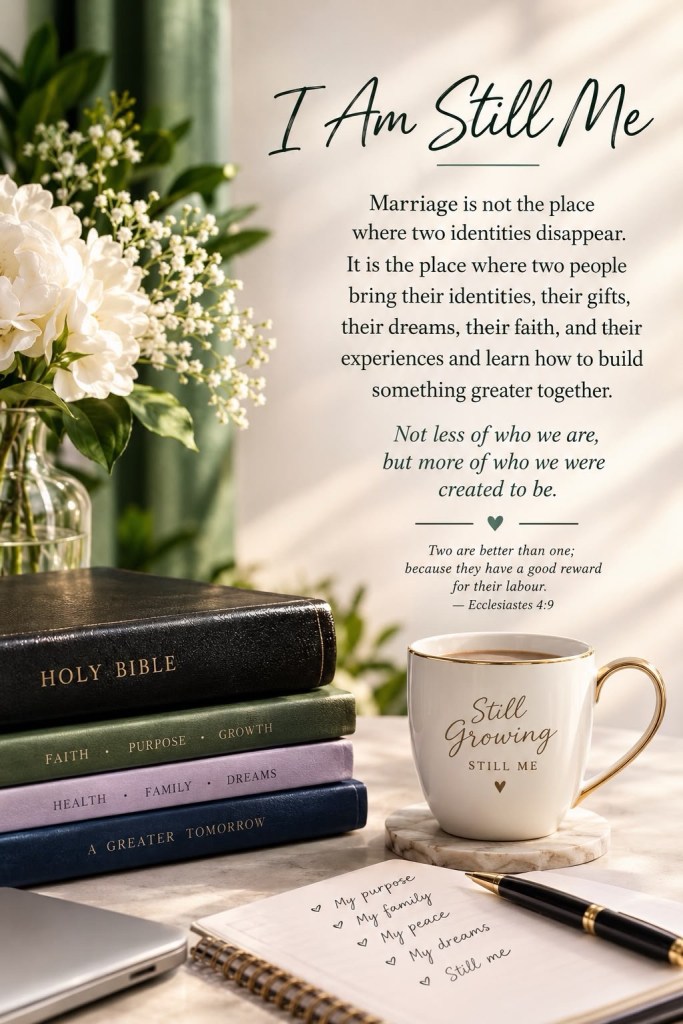
“Two are better than one; because they have a good reward for their labour.” — Ecclesiastes 4:9
And there is another Scripture that has always fascinated me:
“How should one chase a thousand, and two put ten thousand to flight…” — Deuteronomy 32:30
Look at the difference.
One.
Then two.
The power is not necessarily in one person becoming everything. Sometimes the power is in two people bringing what they have and working together.
That is why I believe a woman should not lose herself because she got married.
Many of us were raised to believe that everything begins and ends with marriage.
So when a husband dies, some women feel as though their entire world has died with him.
When a marriage ends in divorce, some feel as though their own lives have ended.
When a husband cheats, some women begin questioning their own worth.
When something goes wrong in the marriage, they begin asking:
What is wrong with me?
But sometimes, the question should be:
What happened to him? What happened to us? And what is God asking me to do with my own life now?
Because another person’s choices do not become your identity.
What your husband does defines his choices. It does not define you.
His betrayal is not your betrayal.
His weakness is not your weakness.
His failure is not your failure.
His death is not your death.
You did not cause another person to make his choices.
And if you had never met that person, would you say God had no purpose for your life?
Of course not.
You would still have been created.
You would still have had gifts.
You would still have had a purpose.
You would still have had a life to live.
So when circumstances change, why should you abandon yourself?
You are still you.
You still have a purpose.
You still have children who need you.
You still have gifts that need to be developed.
You still have prayers to pray.
You still have work to do.
You still have a God who knew you before you ever met the person you married.
And this is where 1 Corinthians 7 caught my attention.
Paul writes about marriage and says:
“The husband render unto the wife due benevolence: and likewise also the wife unto the husband.”
Then he says something remarkable:
“The wife hath not power of her own body, but the husband: and likewise also the husband hath not power of his own body, but the wife.”
Likewise also the husband.
I stopped there.
Because marriage is not presented as one person possessing the other while the other simply submits and disappears.
Paul speaks about mutual responsibility.
Mutual giving.
Mutual consideration.
Mutual belonging.
Even when husband and wife temporarily abstain from intimacy for fasting and prayer, Paul speaks of doing so by agreement and for a purpose.
There is mutuality.
There is consideration.
There is communication.
There is returning to one another.
There is the recognition that marriage is not simply physical. It is spiritual, emotional, relational, and deeply human.
And perhaps that is why prayer is so important in a home.
Not merely because we want God to answer our prayers, but because prayer creates a pattern.
A pattern of turning toward God together.
A pattern the children can see.
A pattern they can eventually carry themselves.
I remember a time when I was leaving the house and one of my sons stopped me.
“Mommy, we forgot to pray.”
I told him we could pray in the car.
So we prayed.
And something beautiful happened.
It became a habit for him.
Later, he would remind me.
“Mommy, can we pray again in the car?”
I had not given him a long lecture about developing a prayer life.
He simply watched.
He participated.
He remembered.
And eventually, he reminded me.
That is the power of what we establish in a home.
Sometimes the child reminds the parent.
Sometimes the spouse reminds the spouse.
And sometimes the Holy Spirit reminds all of us.
So yes, I believe in marriage.
I believe in family.
I believe in love.
But I also believe in identity.
A woman can love her husband without disappearing into him.
A man can love his wife without losing himself in her.
A mother can love her children without abandoning herself.
A person can experience grief without surrendering the rest of his or her life.
A person can experience betrayal without becoming the betrayal.
And a person can experience loss without losing purpose.
Marriage should not be the place where two identities disappear.
It should be the place where two people bring their identities, their gifts, their weaknesses, their dreams, their faith, and their experiences and learn how to build something greater together.
I should meet you better than I left you.
And you should meet me better than you found me.
If we are truly walking together, something in both of us should be growing.
Our wisdom should grow.
Our compassion should grow.
Our faith should grow.
Our ability to love should grow.
Our ability to serve should grow.
Our children should benefit from what we are building.
Our home should become better because we are in it.
That, to me, is the beauty of marriage.
Not that I cease to be me.
Not that you cease to be you.
But that we become better together.
And perhaps this is part of the mystery of two becoming one.
It is not one person disappearing into the other.
It is two people choosing to walk in the same direction.
Two people learning to give.
Two people learning to receive.
Two people learning to pray.
Two people learning to forgive.
Two people learning to grow.
Two people learning to build.
Because one may chase a thousand, but Scripture asks us to consider what two can do together.
So I will continue to say:
I have an identity.
I had one before marriage.
I have one within marriage.
And I will still have one when circumstances change.
Because my identity was never supposed to rest entirely in another human being.
I am a woman.
I am a mother.
I am a person with gifts, responsibilities, dreams, failures, lessons, and purpose.
And above all, I belong to God.
Marriage can be beautiful.
Love can be beautiful.
Family can be beautiful.
But the healthiest love does not ask you to disappear.
It calls you to become more fully who you were created to be.
And when two people do that together, perhaps they really can chase ten thousand.
Footnotes
Genesis 2:18 — “It is not good that the man should be alone.” Marriage and companionship are presented as part of God’s design for human relationship.
1 Corinthians 7:3–4 — Paul describes marriage through mutual responsibility, mutual giving, and reciprocal consideration between husband and wife.
Deuteronomy 32:30 — “How should one chase a thousand, and two put ten thousand to flight…” This illustrates the strength and multiplied effectiveness that can come through partnership.
Additional Scripture: Ecclesiastes 4:9–10 — “Two are better than one…” A reminder that companionship can strengthen people as they work and walk through life together. By Joan A Roberts
I know many of you have read some of my poems, especially I Have an Identity, and I remember some of the conversations and comments that followed.
Let me clarify something.
I am not a feminist in the sense of teaching women to reject men, marriage, family, or the beautiful responsibility of building a home.
Quite the opposite.
I believe in marriage. I love family. I love to love. I believe there is something beautiful about a man and a woman coming together to build a family, when that relationship is embraced with maturity and responsibility spiritually, mentally, psychologically, emotionally, and socially.
A healthy marriage can be wholesome and beneficial to both individuals and to the children they raise.
But I also believe that a woman should not lose herself because she got married.
Many of us were raised to believe that everything begins and ends with marriage.
So when a marriage ends, whether through death, divorce, abandonment, betrayal, or circumstances beyond our control, some women feel as though their entire identity has disappeared.
A husband dies, and their world dies with him.
A marriage ends, and they believe their future has ended.
A husband cheats, and they begin questioning their own worth.
Someone makes an allegation about their husband, and they become consumed by something they did not do and may not even know to be true.
But listen carefully:
What another person does does not become your identity.
His choices define his choices.
They do not define you.
His failure is not your failure.
His betrayal is not your betrayal.
His death is not your death.
You did not become less of a person because someone you loved changed, left, failed, or died.
Imagine that you had never met that person.
Would you say that God had no purpose for your life?
Would you say you could never become what God intended you to become?
Of course not.
So why should the departure of another person cause you to abandon yourself?
You still have a life.
You still have purpose.
You still have children who need you, people who love you, gifts that need to be developed, work that needs to be done, prayers that need to be prayed, and a God who knew you before you ever met the person you married.
And now, here is something that surprised me when I read 1 Corinthians 7.
For those who have been taught that everything in marriage belongs to the man, Paul presents something remarkably mutual:
“The wife hath not power of her own body, but the husband: and likewise also the husband hath not power of his own body, but the wife.”
Likewise also the husband.
I stopped there.
Because that is mutuality.
Marriage is not simply about what a woman owes a man.
It is also about what a man owes a woman.
Paul speaks about mutual giving, mutual consideration, mutual responsibility, and even mutual agreement when husband and wife temporarily abstain from intimacy for prayer and fasting.
That is beautiful.
And it makes me think about something else.
There are seasons when a couple may need to step back from certain things, seek God’s face, pray, fast, examine themselves, and ask God to restore what needs restoration.
The purpose should not be punishment.
It should be God.
It should be healing.
It should be understanding.
It should be restoration.
It should be becoming better individually and together.
And when Scripture speaks about returning to one another, it reminds us that marriage is not merely physical. There is also companionship, friendship, spiritual unity, emotional connection, communication, and the daily decision to care for one another.
Prayer is particularly important in a home.
Not only because we want God to answer our prayers, but because prayer creates a pattern of turning toward God together.
I remember a time when I was leaving the house and one of my sons stopped me.
“Mommy, we forgot to pray.”
I told him we could pray in the car.
We did.
And something beautiful happened.
It became a habit.
Later, he would remind me.
“Mommy, can we pray again in the car?”
I had not sat him down and given him a lecture about developing a prayer life.
He had simply watched us pray, participated in it, and learned the pattern.
That is what children do.
They watch.
They absorb.
They remember.
They remind us.
Sometimes the child reminds the parent.
Sometimes the spouse reminds the spouse.
And sometimes the Holy Spirit gives us that quiet nudge because we have already established the pattern.
So yes, I believe in marriage.
I believe in family.
I believe in love.
But I also believe in identity.
A woman can love her husband without disappearing into him.
She can love her children without abandoning herself.
She can grieve without surrendering her future.
She can experience betrayal without becoming the betrayal.
She can experience loss without losing her purpose.
And she can walk through the changing seasons of life knowing that her identity existed before the relationship and will continue beyond the relationship.
Because ultimately, our deepest identity does not come from being someone’s wife.
It comes from knowing whose we are.
And perhaps that is why this little passage in 1 Corinthians 7 caught my attention:
“The husband hath not power of his own body, but the wife: and likewise also the wife.”
There is something powerful about that word:
Likewise.
Mutual.
Reciprocal.
Together.
Not one disappearing into the other.
Not one becoming the entire identity of the other.
Two people choosing to love, give, pray, grow, and walk toward God together.
And when they need to step back for a season, may they use that season wisely.
May they seek God’s face.
May they examine their hearts.
May they pray.
May they heal.
May they listen.
And when they come together again, may they come back with greater understanding than when they stepped away.
His body is his responsibility, and my body is mine. Yet in marriage, Paul teaches us to give ourselves to one another in mutual love and consideration.
That is not the loss of identity.
That is the beauty of two people learning how to love without losing themselves.
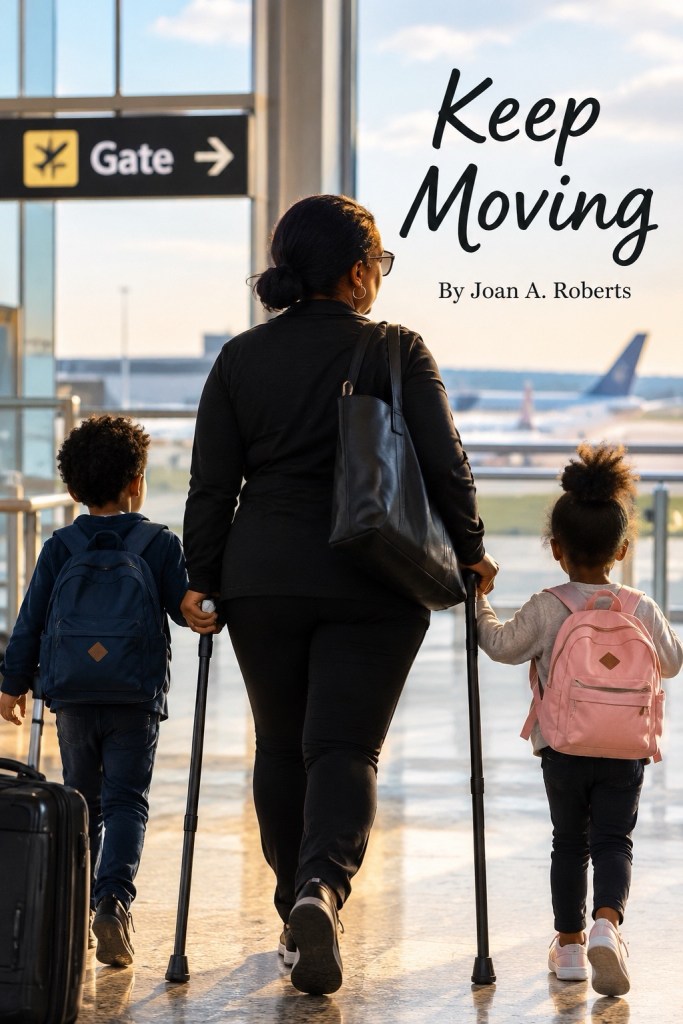
My trip home from Atlanta was an adventure I did not ask for.
Twice, I found myself somewhere I could only describe as nowhere.
And both times, I had my toddlers with me, their little hands in mine.
“Mummy, where are we?”
“Mummy, call Daddy for help.”
I wanted to laugh. I wanted to cry.
“Daddy doesn’t want to be disturbed right now,” I told them. He is busy with meetings at church plus let him take a break for now, since mummy is here to help for now. Not sure if they understood my answer, because kids see dads as super heroes, but, I had to say something to their ever inquisitive minds and itch ears.
“But Mummy, we saw Daddy in church.”
“Yes, I know. But Daddy said he would rather not be disturbed.”
So it was just us.
I tried Uber. The Ubers would not come. I am used to driving my own car, not navigating unfamiliar places through an app. So I thought, Perhaps I should take a taxi.
Then I thought, Maybe the bus.
The bus took us somewhere that felt even more like nowhere.
My battery was at two percent.
For a moment, I felt helpless.
All I could do was pray.
“Children, pray.”
And they did.
I told them, “I know you are holy. God hears your prayers.”
Somehow, we made it through.Eventually, uber worked out and got us safely to our destination.
It happened twice, almost back-to-back, and I remember thinking, Why can’t I just stay in one place with these children?
But perhaps that was the point.
I had not seen my children in a while. I had just come through military life and everything else that had demanded my attention, and I felt almost obligated to give them every good thing a mother could give her children.
I wanted to get them everything and make them comfortable as much as I could and most of what they needed had to take us to destinations, much of which I seriously didn’t have much time or memory to process. I learnt in this journey places to change a lot with new constructions and routes, so ask questions even in a city you once lived.
Like I said I wanted to give them everything within my reach.
So I checked the boxes.
Breakfast.
Clean ears.
Trimmed nails.
Baths.
Hugs.
Every little thing.
I was trying to make up for the mommy duties that had been placed on pause.
At the airport, something unexpected happened.
I met a friend in the disabled line, and we started talking.
Then I looked ahead.
There she was.
My cousin.
The cousin I had dreamed about seeing two nights earlier.
She is a medical doctor. We went to school together. We are almost the same age; she is only two years younger.
And she looked beautiful.
Calm.
Confident.
Unbothered.
She spoke loudly enough for love to travel across the distance between us.
“How are you? Are you doing okay? It has been a minute.”
And something beautiful happened.
She did not ask about my children.
She did not ask about my husband.
And I did not ask about hers.
Not because our families did not matter.
They mattered.
But for once, we did not reduce one another to the usual questions.
Did you get married?
How many children do you have?
Are you still married?
What happened?
Did you make it?
Instead, we simply stood there knowing:
We are still here.
We made it.
That was enough.
Her children were behind her. I know she has three boys, a little older than mine. But neither of us needed a report card on motherhood.
We were two women who had grown up together, separated by life, and somehow found ourselves standing in the same airport again.
We talked about our gray hairs.
We laughed about aging.
And I told her how beautiful she still looked.
She laughed and said, “We are aging every day, but beautifully.”
And I thought about that.
Maybe age really is a matter of perspective.
Maybe life is too.
We were not standing there comparing accomplishments.
We were simply grateful that we were still alive to see each other.
Eventually, we had to separate.
She was going toward one gate.
I was going toward another.
We never got the hug we wanted.
Later, from the plane, I called her.
“I wish we had gotten that hug.”
She had just boarded too.
And I cried a little.
Not because I was sad.
Because memories have a way of becoming tears when they meet gratitude.
Before I reached my gate, I spoke to another person in the disabled line.
He told me about his injury and his fracture. He was hoping for relief and using a scooter.
I looked at him and laughed.
“I have a scooter too, it make walking with the pain not so noticeable. lol and we both laughed,
We laughed together.
And suddenly, I realized something.
Even the word worse is a matter of perspective.
Someone else can look at your life and think you have it better.
You can look at someone else’s life and think they have it better.
But everyone is carrying something.
Everyone has a story.
Everyone is trying to make it to the next gate.
And then I thought about my cousin.
Yes, she passed her examinations.
Yes, she has been practicing medicine for years.
I haven’t.
But I did not sit down and allow disappointment to become my identity.
I went into the military.
I worked.
I endured.
I learned.
I survived.
I built resilience where I could have built resentment.
And now I can stand beside someone who appears to be farther ahead and say:
I do not feel lesser.
Do you know why?
Because I kept moving.
That is what I have learned about life.
You will meet old classmates.
You will meet cousins.
You will meet people who seem to have achieved more than you.
Some will have marriages.
Some will have children.
Some will have degrees.
Some will have careers.
Some will have houses, titles, money, beauty, recognition.
And sometimes you will feel tempted to hide.
But don’t.
Life is not a competition.
When you meet someone from your past, you do not need to prove that you won.
You only need to know that you are still walking.
Ask yourself:
Am I where I need to be?
Am I where God wants me to be?
Am I doing okay?
If the answer is yes, then lift your head.
And if the answer is not yet, keep moving.
Because the story is not over.
At JFK, I almost missed my flight.
I had spent so much time making sure my children were okay that I had nearly forgotten about myself.
I checked everything.
Their ears.
Their nails.
Their breakfast.
Their bags.
One last hug.
One last kiss.
One last look.
I cried.
They were happy.
They were content.
But I wasn’t.
I wanted more time.
More baths.
More mornings.
More little conversations.
More mommy duties.
Because motherhood had been on pause, and I wanted to press play again.
But I know I will see them again.
Christmas.
Thanksgiving.
Halloween.
Another holiday.
Another weekend.
Somehow, somewhere, we will work it out.
And then came the final lesson.
I was put in a wheelchair, but there was nobody available to push me.
I looked at my cane.
I thought about the little strength I had left.
And I said:
Use what you have.
So I got up.
I took my cane.
One step.
Another.
Another.
I kept plunging forward.
Three people behind me eventually missed their flights.
I arrived at my gate about five minutes before departure, panting.
This time, I told them I was military.
“I had to hurry with this cane,” I said.
They looked at me and said, almost gently,
“You don’t have to hurry with the cane anymore. When you get down, we’ll put you in a wheelchair.”
And I smiled.
Because I had already made it.
I had used the little strength I had.
And sometimes, that is all God asks of us.
Not everything.
Just the strength we have today.
When I finally sat on that plane, I closed my eyes.
And I prayed.
“Lord, thank You.
You saw my strength.
You saw my zeal.
You saw me trying.
You saw me taking care of these children.
You saw every wrong turn.
Every bus.
Every failed Uber.
Every prayer.
Every tear.
Every step with the cane.
I don’t know whether You blessed me because I was trying to be a good mother.
But I know that I felt You carrying me.”
My trip to Atlanta was never just a trip to Atlanta.
It was a reminder.
I am still moving.
I am still becoming.
I am still here.
And perhaps that is the greatest achievement of all.
So if you meet me tomorrow, or if I meet you years from now, please don’t ask me first what I have accumulated.
Don’t ask me whether my life looks exactly the way I planned it.
Don’t ask me to compare my chapter with yours.
Just ask me:
“How are you?”
And if we are both still standing, let us smile.
Let us say:
“We made it.”
Then, if there is time, let us tell each other the story.
I write, dislodging my being, Like an alien primed to unravel From the cradle.
I write, listening to my heart speak, Eyes searching, pen strutting, lips quaking In docile tones, Hearts ducking in clicks as the clock peals its chime To keep yet another count.
I write my fertile imaginings, Cloaked in lucid allegory, Altruistic beyond words, A muse born from entrenched experiences, Cracking into bits of matter.
I write with cadence That trots aloof with fervor. I write with subtle impetus, dazzling My weary fingers with unfeigned verve.
I write, sharing each moment lived And shedding unspoken pains that lie bare, Still in a dark labyrinth.
I write with no caution, Awestruck by a wave of phantoms. I write fluidly in fluffy furbelows that emblazon, Gliding me toward extinction.
I write, scorching as fingers bleed, never tiring, As I perspire beneath Atlanta’s sultry sun.
I write at dusk; I write at twilight, When the skies and moonlight Herald my restless indulgence.
I write in love; I write for you and me. I write uncurbed; I write untamed. I write me.
The road less traveled, The road I dread to tread, Where hawkers, bikers, and riders Have no security or reassuring insurance.
The road less traveled, my bane, I loathe to recall its testimony, Even within my sane harmony.
The accidental train Upon the incidental tragic scene. The captain aboard the flight That never made it back at night.
The intercity bus shuttle, The commoners’ hustle.
It is a scary journey; You never know when.
Fate’s nest is a journey Of untold anecdotes, Waddling upon its tail The tale of languish or anguish.
The road less traveled Does not always bring us all back With groceries, shopping bags, or goodies.
The road less traveled is unprecedented, Keeping its feet in fate’s unwavering arms.
Author’s Note
Let us treat every day as though it were our last. Let us pray daily, strive to be good people, meet good people, and be kind whenever we can. Let us be our brothers’ and sisters’ keepers, regardless of race or color, for life is fleeting and unpredictable.
Now that she had it, she didn’t know what to do with the quiet.
Everything she had trusted seemed to have disappeared.
The job was gone.
The money was different.
The people she thought would always be there had moved on.
The comfort she had built her life around was no longer comfortable.
She looked at her hands.
They were empty.
Or so she thought.
She remembered Joseph.
His brothers threw him into a pit before selling him into slavery.
What kind of future could a young man imagine from the bottom of a pit?
Yet the pit did not have the final word.
The same Joseph who entered the pit would one day stand in a palace.
She thought about Job.
He lost what he had built, what he loved, and what made his life recognizable.
His faith was shaken.
His understanding was stretched.
But somewhere in that terrible season, Job discovered something about God that comfort had never taught him.
She thought about David.
Before the crown came the wilderness.
Before the throne came caves.
Before the public victory came private battles.
And then she thought about Jesus.
Betrayed.
Rejected.
Mocked.
Crucified.
Yet what appeared to be the darkest moment became part of the story of salvation.
She lowered her head.
Maybe, she thought, the enemy is not always the end of the story.
Maybe the loss is not always the end.
Maybe the rejection is not always the end.
Maybe the closed door is not always the end.
And perhaps the most frightening question was not:
“Why did this happen to me?”
Perhaps it was:
“What has been inside me all along that I never had to use?”
She began to think about people she had known.
The woman who lost her job and discovered she could make beautiful jewelry with her hands.
The man who suddenly found himself raising children alone and discovered a tenderness and strength he never knew he possessed.
The young person whose family could no longer provide everything and who learned to work, create, negotiate, build, and lead.
The person who lost a business and discovered another one.
The person who went back to school.
The person who started writing.
The person who discovered that the very thing they had been praying to escape had forced them to discover who they were.
She smiled.
Perhaps God had not suddenly given them gifts.
Perhaps He had simply created circumstances in which the gifts could finally be seen.
There are talents that comfort never introduces us to.
There are abilities that remain asleep because life has always been easy.
There are dreams that remain buried because there was never a reason to dig them up.
Sometimes it takes a storm.
Sometimes it takes a wilderness.
Sometimes it takes an enemy.
Sometimes it takes losing the very thing we thought we could not live without.
And sometimes it takes silence.
She looked toward the window.
Then she prayed.
Not for everything to return exactly as it had been.
Not anymore.
She prayed for wisdom.
She prayed for discernment.
She prayed that God would show her what was still inside her.
And in the quiet, she began to understand.
Her job was not her God.
Her possessions were not her God.
Her relationships were not her God.
Her beauty was not her God.
Her comfort was not her God.
They were blessings.
But they were never supposed to occupy the throne.
The Creator must remain above His creation.
She remembered the words:
“The Lord is my shepherd; I shall not want.”
And:
“Seek first the kingdom of God and His righteousness.”
Perhaps that was what the season had been teaching her all along.
Not that God wanted her to suffer.
Not that every enemy had been sent by God.
But that nothing could be allowed to take His place.
She looked at her hands again.
They were still empty.
But somehow they no longer looked empty.
They looked capable.
She began to imagine.
A book.
A business.
A classroom.
A new skill.
A new idea.
A new beginning.
She laughed softly.
The storm had not put those things inside her.
They had already been there.
The storm had simply forced her to look.
And suddenly she understood something she had never understood before:
Perhaps the enemy had not come to introduce her to her destruction.
Perhaps, in God’s hands, the battle had become the classroom.
The wilderness had become preparation.
The loss had become an invitation.
And the silence had become a place where she could finally hear the Creator again.
She closed her eyes.
“Lord,” she whispered, “forgive me for the times I worshiped Your gifts instead of You.”
Then she smiled.
She would still pray for her enemies.
She would still forgive.
She would still protect her peace.
But she would no longer waste the lesson.
Because there was something inside her that needed to come out.
And perhaps there is something inside you, too.
Something the comfort never required.
Something the success never demanded.
Something the easy season never revealed.
So if you are standing in a difficult place today, do not only ask God,
“Lord, when will this end?”
Ask Him,
“Lord, what are You revealing in me?”
Because sometimes the battle introduces us to ourselves.
Sometimes the storm reveals what God placed inside us long before the rain began.
And sometimes, the thing we called the enemy becomes the unexpected classroom where we finally discover who we were created to be. Author’s Footnote
Sometimes the very thing we call an enemy, a loss, a rejection, or a hardship becomes the instrument God uses to reveal what He has already placed inside us.
There are seasons when God allows us to downsize without being destined to stay small.
A physician may arrive in a new country and, for a season, work in a different role while pursuing the credentials needed to practice medicine again. A professional may have to begin again. A parent may have to rebuild. Someone may have to take a job they never imagined taking, return to school, learn a new skill, or walk through a season that feels like a step backward.
But a temporary change in position does not mean a permanent change in purpose.
Joseph had a pit before he had a palace.
David had a wilderness before he had a throne.
The journey may change your surroundings, your income, your title, or your comfort, but it does not have to change what God has placed inside you.
Scripture reminds us:
“For I know the thoughts that I think toward you, saith the Lord, thoughts of peace, and not of evil, to give you an expected end.” — Jeremiah 29:11
That expected end is the destination God has purposed according to His wisdom, not necessarily the destination we imagined for ourselves.
And sometimes, the road to that destination includes seasons we would never have chosen.
“But as for you, ye thought evil against me; but God meant it unto good.” — Genesis 50:20
And:
“And we know that all things work together for good to them that love God, to them who are the called according to his purpose.” — Romans 8:28
So do not despise the season simply because it looks smaller than the life you once had.
A season of preparation is not a sentence of limitation.
God may be using the very journey you wanted to escape to prepare you for the place you have been praying to reach.
By Joan A.Roberts Mother/wife/soldier/doctor Visit my blog for more insights Divineaccolades.com